FAQs About Oral Appliance Treatment for Sleep Apnea
Sleep apnea leads to interruptions to your breathing while you are asleep, which forces your brain to momentarily wake you up to restart your breathing. These interruptions can occur hundreds of times during a single night, making it impossible to get quality sleep.
Sleep apnea can have life-threatening consequences when left untreated for prolonged periods. It can lead to a wide range of issues, from difficulty concentrating to high blood pressure.
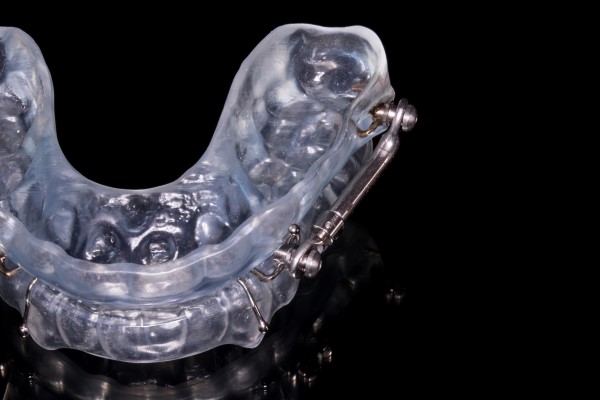
Obstructive sleep apnea (OSA) is caused by a person’s airway being blocked during sleep. It can be caused by the person’s tongue falling back into the airway while they sleep or their jaw pushing on their airway, closing it up. When either is the cause of a patient’s condition, oral appliances, like tongue-retaining devices and mandibular advancement devices, can be used to keep the patient’s airway open while they sleep. OSA can also be caused by other factors, like tissue overgrowth in the airway or being overweight.
Frequently asked questions about treating sleep apnea with oral appliances
Treating sleep apnea with an oral appliance is a non-invasive approach. It does not involve curing the patient’s sleep apnea, but it helps keep their airway open during sleep, stopping or reducing interruptions caused by airway blockages. Patients can start enjoying the benefits of an oral appliance the first night that they go to bed with one. Here are the answers to questions that patients might have about these devices.
1. How do these oral appliances work?
Oral appliances are inserted in the mouth right before going to bed. They are customized to fit all the curves and contours in the patient’s mouth so they should fit comfortably. These devices work in many different ways. Tongue-retaining devices work by preventing the wearer’s tongue from falling into their airway, while chin straps keep the patient’s mouth closed during sleep, forcing them to breathe with their mouth. A dentist will recommend a specific type of oral appliance based on the issue leading to the patient’s airway being blocked while they sleep.
2. Who needs an oral appliance?
Oral appliances work best for mild to moderate cases of obstructive sleep apnea. An oral appliance might also be recommended if the patient finds continuous positive airflow pressure machines intolerable and has been unable to manage their sleep apnea with lifestyle changes like weight loss.
3. How successful are oral appliances at treating sleep apnea?
Studies show that oral appliances work effectively for about 40% of people with severe OSA, 60% of people with moderate cases, and 70% of mild sleep apnea. Using an oral appliance is a non-invasive approach to treatment, so they are often recommended before exploring more invasive treatments, like surgery.
Improve your sleep
Sleep apnea is a serious health condition that should never be ignored. It can have a significant impact on your daily performance, and it has been linked to chronic conditions like heart disease. Call or visit our Rockville clinic to learn more about how we can restore your sleep with an oral appliance.
Request an appointment here: https://whiteflintfamilydental.com or call White Flint Family Dental at (301) 273-1085 for an appointment in our Rockville office.
Check out what others are saying about our dental services on Yelp: Do I Have Sleep Apnea in Rockville, MD.
Recent Posts
Oral appliances provided by a general dentist are an effective treatment option for sleep apnea. Sleep apnea is a severe disorder in which patients repeatedly stop breathing for a few seconds while sleeping. When the airways are clogged, airflow is momentarily limited, reducing the brain's oxygen level. The condition has physiological and emotional consequences for…
Sleep apnea is a serious sleep disorder that affects millions of individuals worldwide. It occurs when breathing repeatedly stops and starts during sleep, disrupting rest and potentially causing long-term health consequences. Many people are unaware that a general dentist plays a key role in diagnosing and managing sleep apnea, particularly with non-invasive treatment solutions. By…
Dental sleep medicine treatment focuses on treating sleep apnea and other related conditions. More dentists are choosing to practice in this line of work because there are actually a lot of good dental sleep apnea treatments available to patients. Modern-day dentistry has evolved quite a bit, which has allowed for the evaluation of all kinds…
Oral appliance therapy is ideal for people with mild to moderate obstructive sleep apnea (OSA). This dental device keeps the airway open during slumber at night. It prevents sudden and short breathing cessation that lasts for 1-2 seconds or longer. Severe cases can cause serious health issues such as hypertension, heart attack, and stroke. Keep…